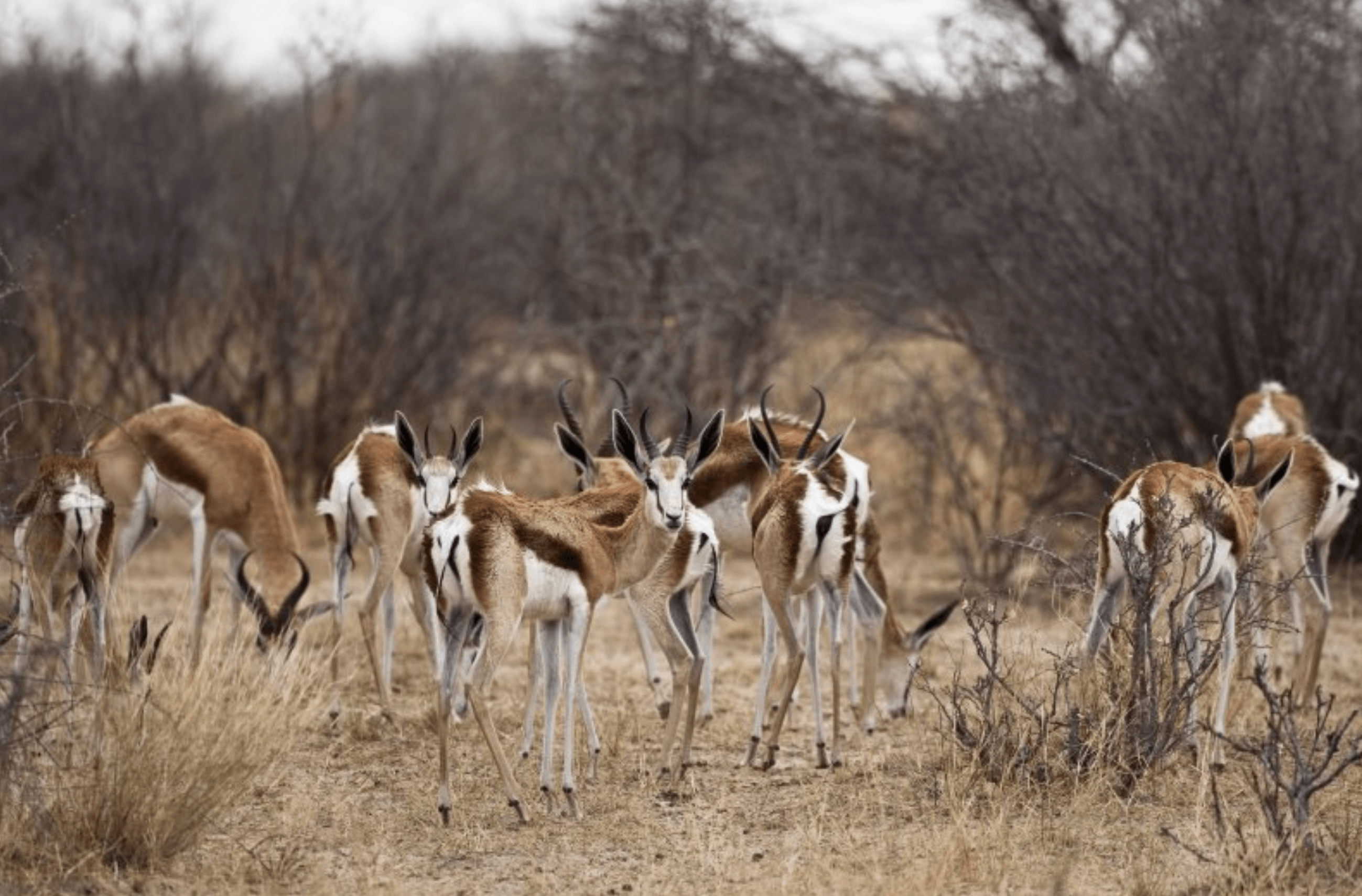
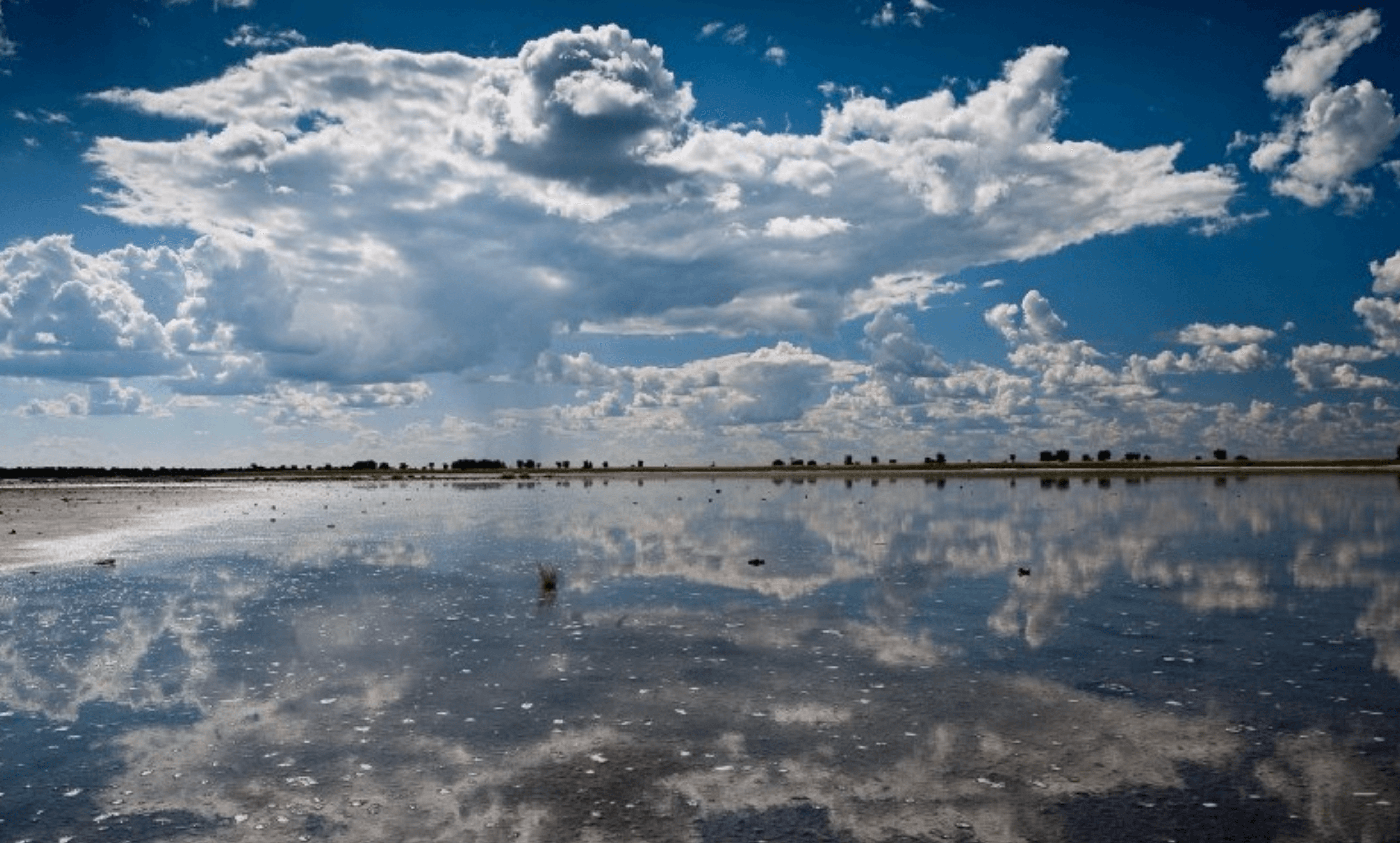
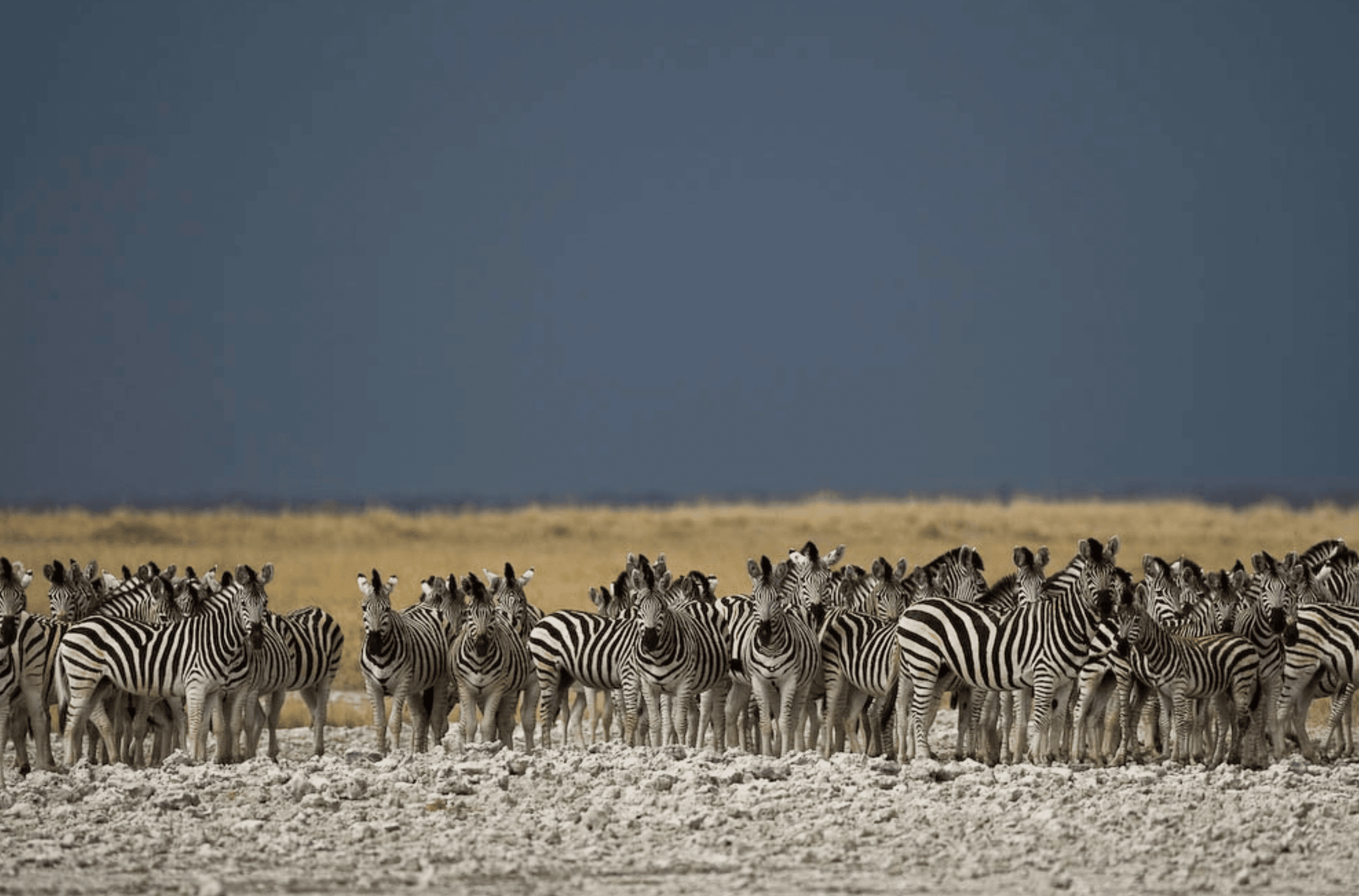
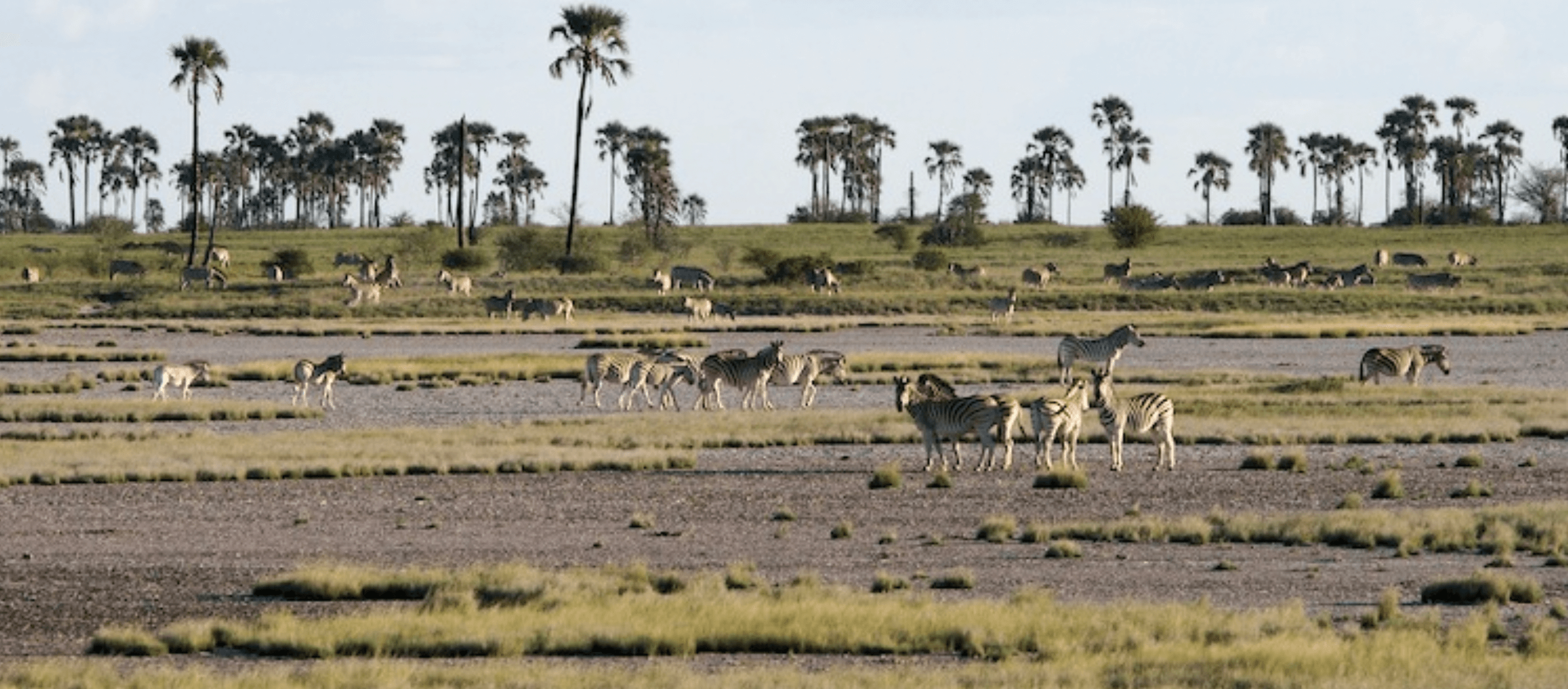
The Makgadikgadi is home to the world’s second-largest zebra migration, with an estimated 25,000 to 30,000 animals, the majority being zebras, participating each year. The migration is also followed by a number of predators, notably lions and hyenas. This migration begins from as far as the southern Okavango and other regions, commencing once the summer rains have started to fall (December) and continues until the end of March. The pans are now filled with a shallow layer of water, attracting a large number of migrating birds as well as zebras and other wildlife, which will be feeding on the nutrient-rich grasses that surround the pans.
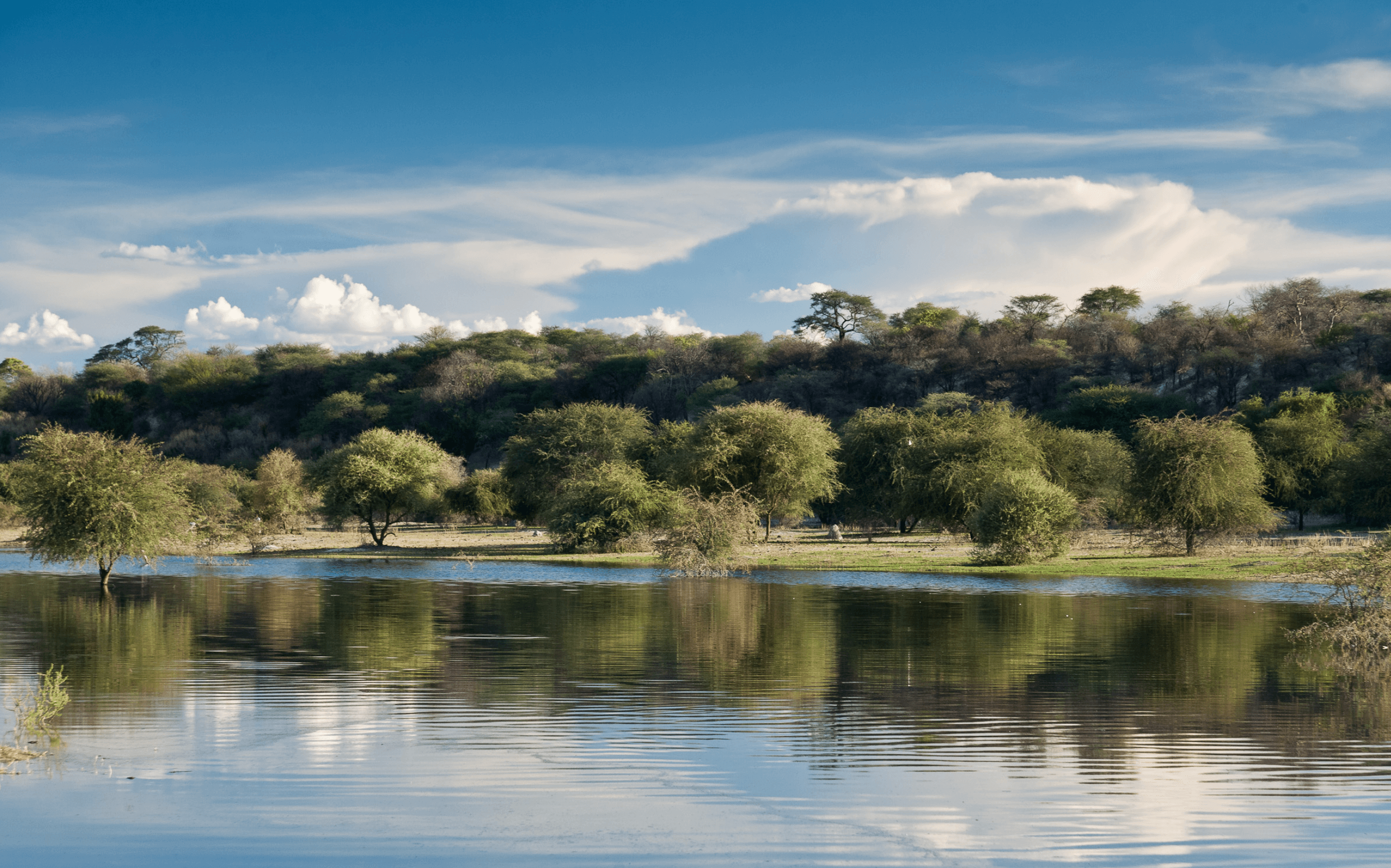
A lesser-known fact is that only one-fifth of the Park comprises salt pans, while the rest is primarily rolling grasslands. These grasslands attract a migration during the summer. The western side of the Makgadikgadi is dominated by the Boteti River. The Makgadikgadi area encompasses four main vegetation types: Riverine woodland found along the Boteti, scrubland, grasslands, and salt pans with Palm tree woodlands.
Campground
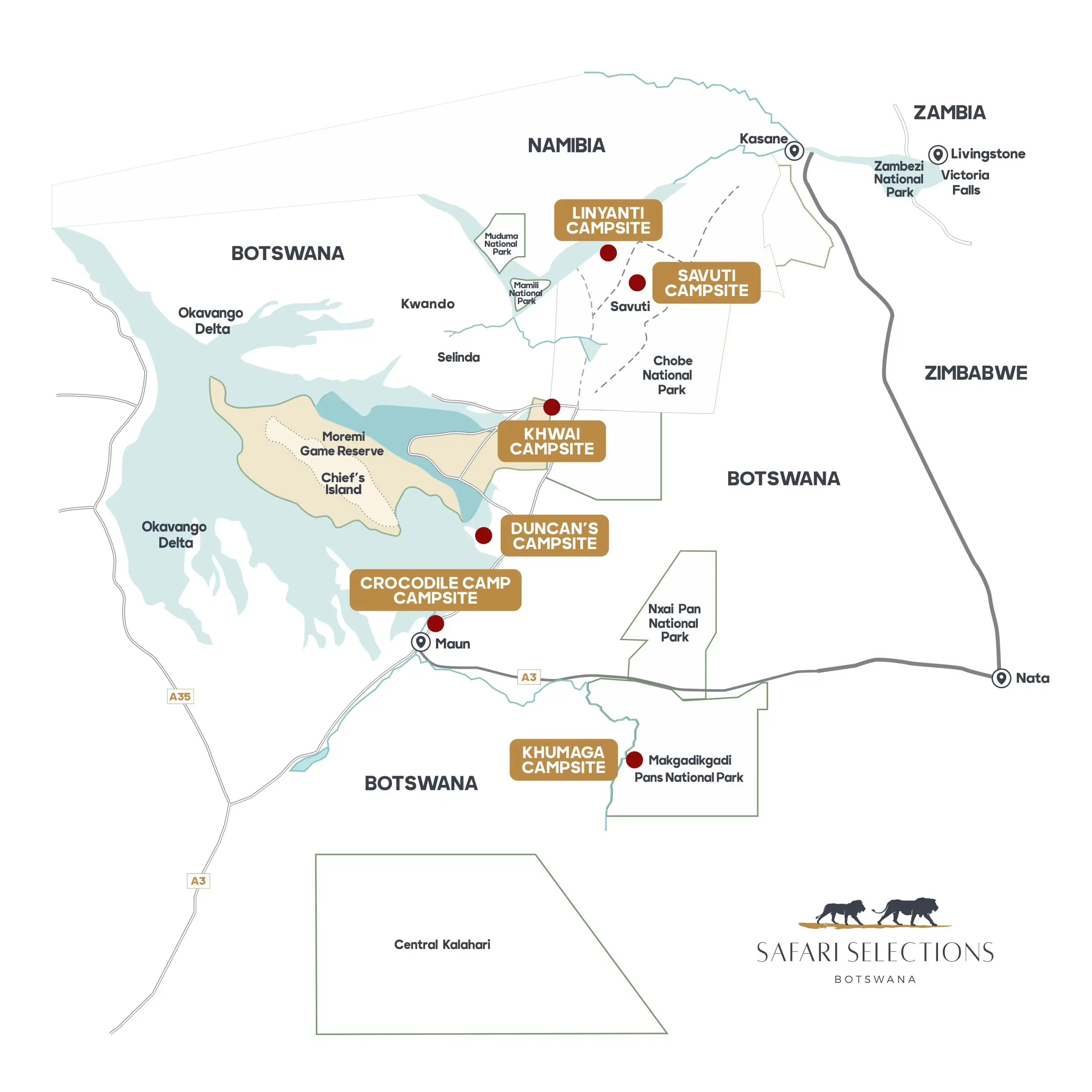
The campground at Njuca is located within the Makgadikgadi National Park – this is a rustic campsite.
The campground consists of:
2 generously spaced campsites.
Additional features:
Rustic pit-loo and shower-rig – this is rustic camping.